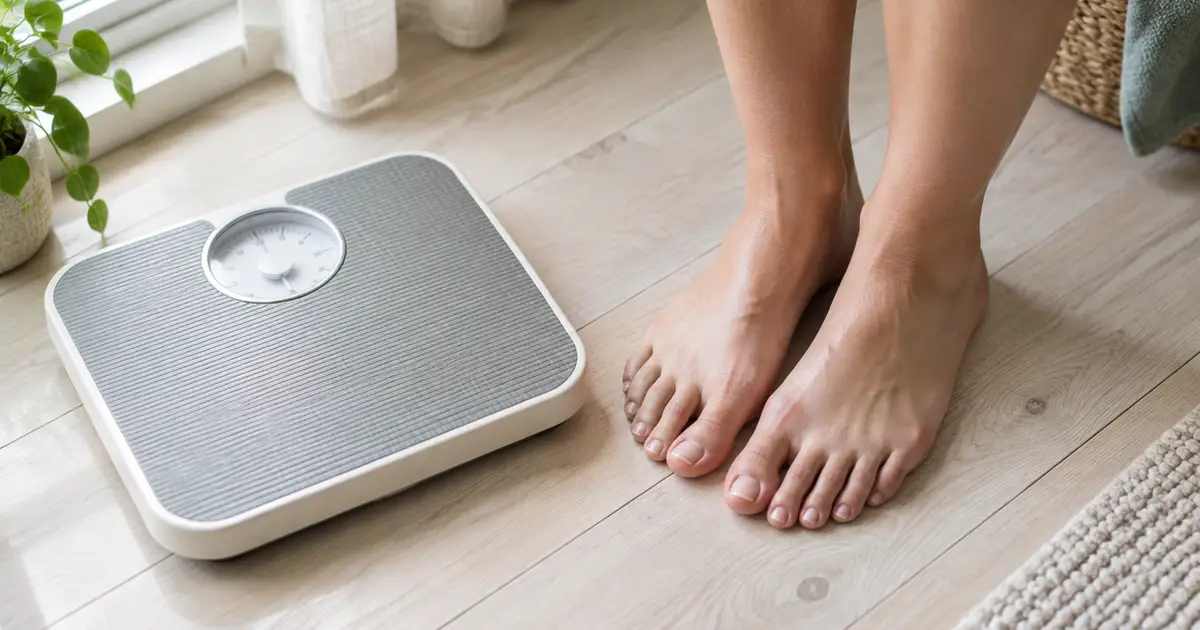
If your shoes feel roomier since you started losing weight, or your heels ache when you stand up, you have probably come across the phrase Ozempic feet. The worry underneath it is usually a simple one: is the injection doing something to my feet?
What "Ozempic feet" means
Ozempic feet is an informal term for changes in the fullness or appearance of your feet that can happen after significant weight loss. This can happen after taking weight loss treatments such as Ozempic, Mounjaro or Wegovy.
The name follows Ozempic face, which spread the same way.
What people describe
People describe feet that look bonier, loose skin across the top of the foot, shoes that feel roomier than they did, and heels or soles that ache after a while on them. Those are things people notice about their own feet, and noticing is where the evidence for the term stops.
The NHS is clear about one thing here: do not try to diagnose the cause of heel pain yourself.2
A description, not a diagnosis
A photograph cannot show what is going on under the skin of your heel. The nearest clinical condition, heel fat pad syndrome, has causes and diagnostic criteria that are poorly understood.3
In one study, it was diagnosed from a heel fat pad under 3mm on an ultrasound scan, together with pain at the centre or edge of the heel that was worse barefoot or after standing for a long time.3 So it takes a scan and a clinician who examines your foot.
Is it a side effect of Ozempic?
No. The adverse reaction table in the Ozempic product information names no reaction affecting the feet, heels or soles.4 The NHS list of common side effects of semaglutide does not include changes to the feet either.1
What the product information lists
That table is built from the clinical trials and from reports after the medicine went on sale. No entry in it names the feet, heels or soles, foot pain, or loose skin.4
The only touch-related entry is dysaesthesia (an abnormal or unpleasant sense of touch), which is listed as rare. The table does not tie it to any part of the body.4 Tingling or loss of sensation in your foot needs a GP whatever the cause.2 There is more on when to get help further down.
The NHS lists the common side effects of semaglutide as feeling sick and being sick, constipation, diarrhoea, tiredness, itchy or red skin where you inject, and hair loss.1 There is more in our article on Ozempic side effects.
What the medicine is licensed for
Ozempic is licensed for adults with type 2 diabetes that is not controlled well enough, alongside diet and exercise.4 If the medicine itself is new to you, start with what Ozempic is.
Semaglutide lowers body weight and body fat by reducing how much you eat, through a lower appetite.4
What the evidence says about weight loss and your feet
Thinning of the heel fat pad is a recognised problem, and the research on it points to ageing, rheumatological conditions, diabetes and obesity. Losing weight does not appear on that list, and neither does a weight loss medicine.3
The fat pads in your feet
The heel fat pad is the cushion between your heel bone and the ground. It absorbs shock and spreads the load across your sole as you walk.3
Expert opinion suggests that ageing, injury, repeated or prolonged overloading, being overweight, poor footwear, steroid injection, and conditions such as diabetes and rheumatic disease may all harm the pad.3
What the research does and does not show
The scoping review that gathered this evidence associates thinning of the pad with ageing, rheumatological conditions, diabetes and obesity.3 Neither that list nor the expert opinion mentions losing weight or a weight loss medicine, though steroid injection is on it.3
One study measured heel pads and body mass index (BMI) in adults with no foot symptoms. A higher BMI went with a thicker and stiffer heel pad.5 It compared people at different BMIs, so it does not describe what happens to a heel pad when someone loses weight.5
The review calls the causes and diagnostic criteria of heel fat pad syndrome poorly understood.3
Loose skin after large weight loss
The NHS says that as people lose weight after weight loss surgery, they may be left with excess folds and rolls of skin, particularly around the breasts, tummy, hips and limbs.6 That advice describes surgery, and the feet are not among the areas it names.6
Aching heels or the balls of your feet
Heel pain can be caused by exercising too much, standing on hard surfaces for too long, or being overweight, the NHS says.2 Pain in the ball of the foot is often down to exercise such as running, shoes that are too tight, or a condition such as arthritis.7 Neither list includes a weight loss medicine.
What helps with heel pain
The NHS self-care advice for heel pain does not depend on the cause: take the load off, cushion the heel, and treat the pain while it settles.2
Shoes, insoles and heel pads
Wear wide, comfortable shoes with a low heel and a soft sole, and use soft insoles or heel pads in them.2 Try not to walk or stand for long periods, especially barefoot, and leave high heels and tight pointy shoes alone for now.2
If you have diabetes, see a GP about heel pain rather than working through it yourself.2 People at moderate or high risk of a diabetic foot problem are referred to the foot protection service, a specialist NHS foot team for people with diabetes.8
Heel cups and taping
Rest, changing your activity, icing, painkillers, arch taping and cushioned gel heel cups have all been recommended for heel fat pad syndrome.3 No randomised trial has tested heel cups or arch taping for it.3 And the condition is diagnosed by a clinician, from a scan alongside the pattern of pain.3
Rest, ice and painkillers
Rest and raise your heel when you can. Put an ice pack, or a bag of frozen peas, in a towel on your heel for up to 20 minutes every 2 to 3 hours.2
For the pain itself, the NHS suggests painkillers such as paracetamol or ibuprofen gel, or ibuprofen tablets if you need them.2
Losing weight may help heel pain
Being overweight is one of the causes of heel pain the NHS lists.2 Its self-care advice includes trying to lose weight if you are overweight, so losing weight may ease heel pain.2
Keep taking your medicine unless you are advised to stop
If side effects bother you or do not go away, speak to a pharmacist or doctor.1 Keep taking your medicine unless you are advised to stop.1
If you want to stop semaglutide, talk to your doctor first, and do not stop suddenly. With type 2 diabetes, stopping could affect your blood sugar.1
When to get help
Two things set the pace: how long the pain has gone on, and whether anything else about the foot has changed. You can also read our article on the serious side effects of GLP-1 weight loss jabs.
See a GP if
See a GP if:
- heel pain has not improved after 2 weeks of treating it at home, or you have any tingling or loss of sensation in your foot2
- you have diabetes and heel pain, because foot problems can be more serious with diabetes2
- you notice early signs of nerve damage, usually in the feet. You may notice tingling or loss of sensation in the feet, loss of balance or weakness, or a cut or ulcer on your foot that is not getting better9
Get urgent help if
Ask for an urgent GP appointment or get help from NHS 111 if the skin is painful, hot and swollen.10
NICE counts an unexplained hot, swollen foot with a change in colour, with or without pain, as an active diabetic foot problem.8
Reporting a suspected side effect
You can report any side effect you get on the Yellow Card website, including one that is not in the list.1
If you have diabetes
See a GP about heel pain if you have diabetes, because foot problems can be more serious.2 With diabetes, a change in your feet is never only about how they look.
Why a change in your feet matters more
In the UK, diabetes is the most common cause of peripheral neuropathy.9 NICE defines a diabetic foot problem as one caused by loss of feeling in the feet, poor circulation, or both.8
The NHS says type 2 diabetes can lead to foot problems such as ulcers and infections, which sometimes end in surgery to remove a foot or leg.11
What to do
In practice, that means:
- see a GP about heel pain rather than managing it alone2
- expect your risk of a diabetic foot problem to be assessed when diabetes is diagnosed, and at least once a year after that8
- if that assessment puts you at moderate or high risk, you should be referred to the foot protection service8
- with type 2 diabetes, see a GP or diabetes nurse if you have blisters or cracked skin on your feet11
- with type 2 diabetes, go to all your diabetes appointments and do not miss any tests, so anything that develops is found early11
Frequently asked questions
Does Ozempic cause foot pain?
Foot pain is not in the Ozempic adverse reaction table.4 The only touch-related entry is dysaesthesia, listed as rare, and no part of the body is named against it.4
Heel pain is commonly caused by exercising too much, standing on hard surfaces for too long, or being overweight.2 Pain in the ball of the foot is often down to exercise such as running, shoes that are too tight, or a condition such as arthritis.7
Does Ozempic thin the fat pads in your feet?
The fat pad research does not link thinning to semaglutide or to losing weight.3 The scoping review on heel fat pad syndrome links thinning with ageing, rheumatological conditions, diabetes and obesity.3 The expert opinion it reports adds injury, overloading, being overweight, poor footwear, steroid injection, and conditions such as rheumatic disease.3
One study measured heel pads and body mass index in adults without foot symptoms. A higher BMI went with a thicker and stiffer pad, which does not tell you what happens to a heel pad when someone loses weight.5
Will my feet go back to normal if I stop Ozempic?
Yes, they should. This has not been noted as a long term effect from Ozempic.
Does Wegovy cause the same thing?
Yes, Wegovy and Ozempic are brands of the same medicine, semaglutide.1
Should I buy smaller shoes?
For heel pain, the NHS suggests wide, comfortable shoes with a low heel and a soft sole, and soft insoles or heel pads in them.2 It also says not to wear high heels or tight pointy shoes.2
If you have diabetes, see a GP about foot problems.2 People at moderate or high risk of a diabetic foot problem are referred to the foot protection service.8
Can I take painkillers for the pain?
Yes. For heel pain, the NHS suggests painkillers such as paracetamol or ibuprofen gel, or ibuprofen tablets if needed.2
Key takeaways
- Ozempic feet is a name from social media, and the Ozempic adverse reaction table lists no reaction affecting the feet.4
- Ozempic and Wegovy are brands of the same medicine, semaglutide.1
- Nothing in the fat pad research points to semaglutide or to losing weight as a cause of thinning.3
- For heel pain, wear wide comfortable shoes with a low heel and a soft sole, and use soft insoles or heel pads.2
- See a GP if heel pain has not improved after 2 weeks, or if you have tingling or loss of sensation in your foot.2 See a GP too if you have diabetes and heel pain.2 If the skin is painful, hot and swollen, ask for an urgent GP appointment or get help from NHS 111.10
Sources
References
This page lists 11 sources. Numbered markers in the text link to them, and a pharmacist approved each of those citations. Each cited source links back to where it is cited.
-
Effects of Body Mass Index on Mechanical Properties of the Plantar Fascia and Heel Pad in Asymptomatic Participants, Foot & Ankle International via PubMed, 2017 [Accessed 17 September 2026]. https://pubmed.ncbi.nlm.nih.gov/28535692/
-
Complications of weight loss surgery, NHS, 2024 [Accessed 17 September 2026]. https://www.nhs.uk/tests-and-treatments/weight-loss-surgery/complications/
-
Pain in the ball of the foot, NHS, 2025 [Accessed 17 September 2026]. https://www.nhs.uk/symptoms/foot-pain/pain-in-the-ball-of-the-foot/
-
Peripheral neuropathy, NHS, 2022 [Accessed 17 September 2026]. https://www.nhs.uk/conditions/peripheral-neuropathy/
-
Cellulitis, NHS, 2024 [Accessed 17 September 2026]. https://www.nhs.uk/conditions/cellulitis/
-
Complications of type 2 diabetes, NHS, 2025 [Accessed 17 September 2026]. https://www.nhs.uk/conditions/type-2-diabetes/complications/
Reference links open the cited source pages. If you spot something out of date, tell our content team.
Approval record
Clinical sign-off
Karim Nassar, GPhC 2064752 ·
Compliance check
Karim Nassar, Pharmacist ·
Approved text
Version 7797c70c
Keep reading
More Ozempic advice