

Article in Summary
As you progress onto Milestone 3, one of the new additions to your daily routine is cardio and strength exercise – the aim is to perform 150 minutes of moderate intensity cardio and 2 strength sessions per week. While these can be done at home to good effect, there may come a time when you are ready to attend the gym. This article aims to describe what your gym journey will physically look like the moment you step foot in the facility. Always keep in mind that members of staff are there to help with any questions, comments, or concerns you may have – there is no such thing as a silly question!
As you enter the gym, you should identify some key areas of importance. For example, be aware of where the staff room or reception area is if you ever need help, familiarise yourself with changing rooms, note where the water stations are, and explore the layout of the equipment. You will notice it is segmented into cardio machines, weight machines, benches, squat racks and open areas. Guided tours and induction classes can be amazing, as they will show you around the facility as well as demonstrating proper use of equipment.
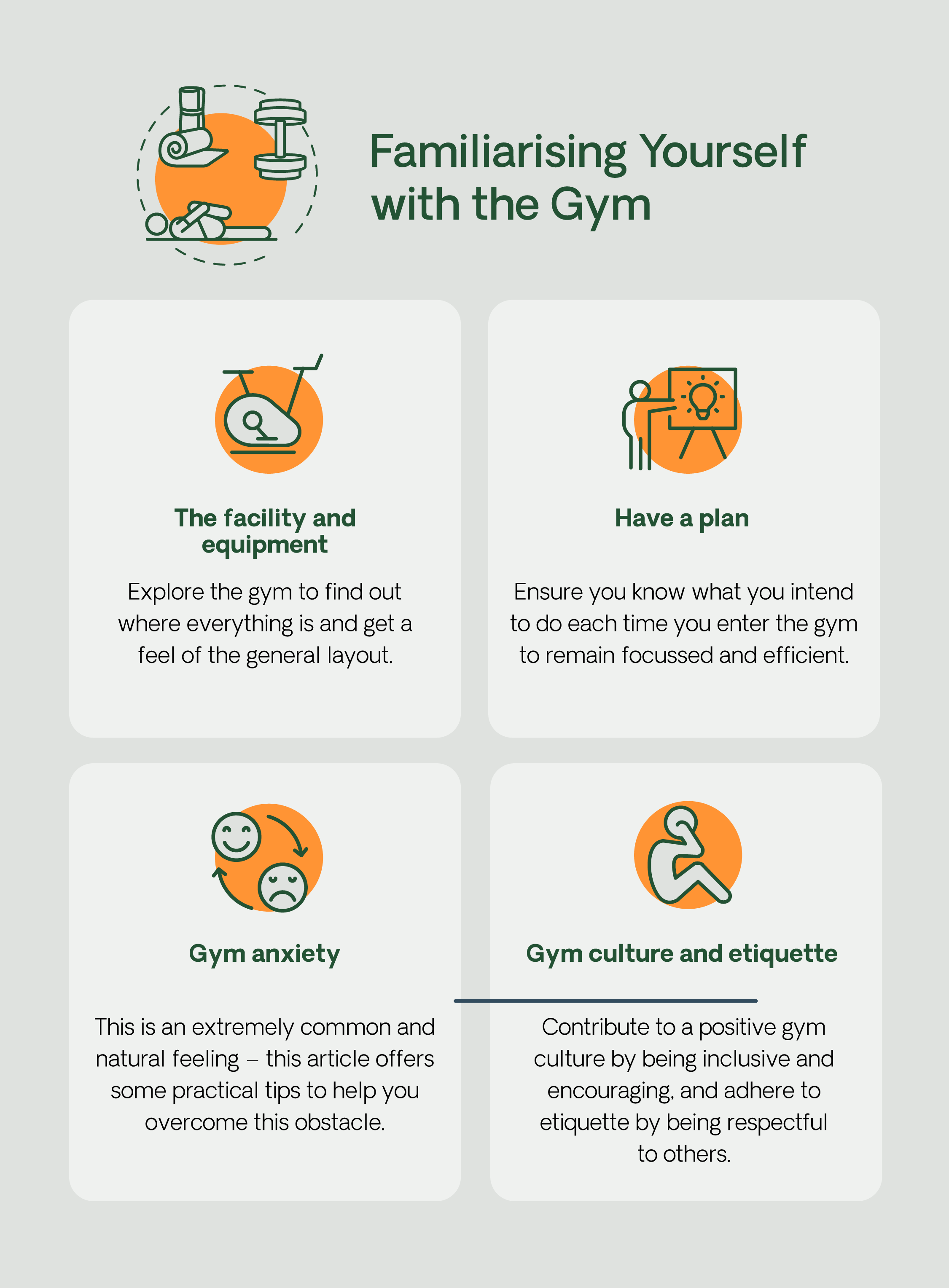
Beyond the physical layout of the gym and its equipment, there are other key factors to consider to make your gym experience both beneficial and enjoyable…
- Have a plan: there are specific outlines you are working towards for cardio and strength exercise in Milestone 3, so planning your sessions ahead of time is essential. Know what you are going to do each time you go to the gym, so you remain focussed and are not wandering around aimlessly.
- Gym anxiety: you may feel out of place or that you are being judged but, just like yourself, everyone is there for their own benefit. You can overcome anxiety by focusing on yourself, attending at off-peak hours, trying introductory classes, or bringing along a workout buddy.
- Etiquette and culture: align yourself with a positive gym culture by being inclusive, helping anyone in need, and emanating positivity. Also be aware that there is some basic etiquette to follow, like wiping down equipment after use, placing equipment back after using it, and respecting people’s personal space.
Gym Journey Overview
Assuming you are relatively new to exercise, you may have little to no experience of being in the gym environment. This novel setting can be intimidating, however, becoming familiar and comfortable with the gym is one of the best things you can do for your fitness journey. While having an active lifestyle and moving at home is amazing, the gym is necessary if you want to propel yourself to higher levels of fitness, especially in relation to strength training.
In this article, we will describe and explain your step-by-step journey in the gym. From walking through the door for the first time, to ensuring you have an exercise plan in place, and dealing with other factors like adhering to gym etiquette and managing gym anxiety.
This guide should not only help you visualise exactly what lies ahead, but act as a tool you can refer to at any time for reassurance or to remind you of the gym journey basics.
The Facility and Equipment
You take your first steps into the gym – what should you be looking out for? Firstly, there may be a reception or desk area for you to sign up if you haven’t already but if you have, then great! Before setting foot on the gym floor, there are some other key areas to locate. Most gyms will have changing areas and lockers where you can get ready and store your belongings. As you know, it is important to always stay hydrated, especially when exercising, so identify water stations you can use to fill up your bottle if necessary.
As you leave the changing rooms and move into the gym, you will see all sorts of equipment – don’t be overwhelmed! Firstly, equipment will likely be grouped so that cardio machines are in one area, weight machines in another, dumbbells and benches will have their own section, and then there will be space for squat racks and deadlift platforms where people use barbells with weighted plates. Very briefly, the cardio machines you will typically find are treadmills, exercise bikes, X-trainers, and potentially Ski machines. Some gyms will also have an open area for bodyweight exercises, stretching, or a place where you can take other pieces of equipment like medicine balls, kettlebells or weighted barrels. It is important to orient yourself as the next section will require you to know where things are and what they do in order to execute your plan.
The Importance of Having a Plan
When you go to the gym – it is vital that you have a plan which describes what you are going to do. This may consist of you attending a gym class such as body combat, performing your own cardio session, or lifting weights as part of your strength training. There will be many classes for beginners which you could enquire about, and it may even help to attend these with a friend. In addition, if you feel like you need extra support with your training, there will be personal trainers at the gym who will offer their services to ensure you are training safely and effectively.
Without a clear vision of what you want to achieve each time you show up to the gym, you will feel lost, and this could lead to stagnation or regression of your progress. You don’t want to fall into the trap of wandering around the gym aimlessly, as ultimately, you will be wasting valuable time!
Given that you are likely working towards Milestone 3 while reading this, your workout plans should align with your goals which contribute towards your 150 minutes of moderate intensity cardio and 2 strength training sessions per week. We won’t dive into the details of planning a workout in this article, we just want to make you aware of its importance! There is plenty of content available to you with renu which will guide you through the process of planning workouts and ensuring they progress and change appropriately over time to optimise your health and fitness.
Dealing with Gym Anxiety
Even if you are familiar with the gym’s layout and have a plan in place, one stumbling block many people experience is gym anxiety. Don’t worry, this is extremely common and in fact, almost everyone that has ever been to the gym will have felt this way at least once! Realising where this feeling comes from and knowing how to deal with it will ensure that you can enjoy the gym and the health benefits it has to offer for many years to come.
There are a few potential sources of your gym anxiety, so let’s tackle them one-by-one. The first is that as a beginner, you may feel like people are judging you as you are unfamiliar with the equipment. In addition, you may feel like your fitness level is being judged by others. As you will soon find out, this is nothing to worry about! Alternatively, you may feel slightly intimidated by the regular gym go-ers, the noises people make, or even the size of the gym. One final source of gym anxiety is based on the way you perceive yourself – this could be in terms of physical appearance, your technique, or even the clothes you are wearing.
If you have experienced any of these anxiety triggers, here are some key pieces of advice to help ameliorate your concerns…
- Most people feel or have felt the way you are feeling, meaning they are also focussed on themselves and not on other people! Everyone is there for their own benefit and don’t pay much attention to others – you should do the same and solely focus on yourself.
- If you are a beginner and the large crowds cause anxiety, attending at off-peak hours until you become more comfortable is a good option.
- Gyms offer introductory classes which help you familiarise yourself with the equipment and each aspect of the facility. This is a great chance to increase your gym confidence, as they will also demonstrate appropriate form and technique for the machines and weights.
- Staff members are there to help – don’t hesitate to ask them questions or raise any concerns to them.
- Finally, going to the gym with a workout buddy is an amazing way to quell anxiety, as having a familiar face alongside you offers comfort and support.
Etiquette and Culture
As you immerse yourself into a new environment, it is also important to understand the culture and general etiquette to adhere to while in the gym. This way, you are much more likely to have a very positive experience with other gym go-ers as well as all the members of staff. You will also be contributing to maintaining a safe and clean environment for everyone else to enjoy.
In terms of gym culture, you may have an image in your head of massive bodybuilders dominating the gym floor – this is far from the truth in most commercial gyms! Nowadays, gyms are very diverse, and the culture is both positive and encouraging. Inclusivity is a key aspect of gym culture – people of all shapes, sizes and fitness levels are welcome. So, avoiding judgement and embracing any person trying to better their health creates an extremely positive atmosphere. Another key part of gym culture is to offer help where you think it is needed. Whether you see someone struggling with a machine, carrying equipment, or even with a drink spillage, offering your help will help align yourself with a supportive gym culture. To summarise this in three words, be supportive, inclusive and helpful!
There are a few specific points to be aware of regarding gym etiquette too…
- If the gym is busy, be efficient with your equipment if others are waiting. This is not to say that you need to rush, just don’t take too long between sets and avoid taking phone calls or sitting on your phone for too long.
- If someone is waiting for a machine you are using, you can offer to share it with them whereby you perform alternate sets.
- Once you have finished with any weights or equipment, place them back in the appropriate place to save the staff from having to do it for you.
- Some gyms will provide sanitising spray and wipes, and it is common courtesy to wipe down your equipment after use.
- Be mindful of other peoples’ personal space and give them room to exercise safely.
Reference Links
Planetfitness.com. (2025). 7 Tips to Help You Overcome Your Gym Anxiety | Planet Fitness. [online] Available at: https://www.planetfitness.com/community/articles/7-tips-help-you-overcome-your-gym-anxiety.
Healthline. (2022). The Do’s and Don’ts of Gym Etiquette for Every Situation. [online] Available at: https://www.healthline.com/health/fitness/gym-etiquette#the-basics.