

Importance of Minerals
Hello and welcome to the continuation of part 3 of this course, minerals. As we discussed previously, vitamins are the organic micronutrients, whereas the minerals are the inorganic micronutrients of our diet.
This means minerals come from the earth and water around us. Of course, we don’t expect you to eat dirt in your renu journey! Minerals are consumed by the plants and animals that we eat throughout the day. Therefore, having a balanced and varied diet helps you to get the necessary nutrition to help you feel your best.
There are 13 minerals that are essential within your diet. This means, similar to most vitamins, your body can’t make enough to support its function and needs to get them from somewhere else. These minerals can be split into macro- and micro-minerals. This simply means that you need more of some (macro) and slightly less of the other (micro).
Electrolytes
First, however, let’s talk about electrolytes. You may have heard these mentioned in used after extended or intense bouts of exercise. This I because these minerals are used to keep your body’s fluids in balance and that, due to the fluid use throughout exercise, they need to be replenished. These electrolytes are:
- Sodium – Helps maintain fluid balance, muscle and nerve function, and blood pressure. This is found in salt, sunflower seeds, seaweed, and aubergine.
- Potassium – Helps maintain fluid balance, muscle contractions, and nerve function. Potassium can be found in bananas, kiwi, dark leafy greens, lean meats, wholegrains, and nuts.
Dietitian’s Tip:
It’s important not to excessively salt your foods whilst cooking or at the table. Instead look to adding your favourite spices or herbs when cooking to get a robust and varied taste within your meal!
Macro-Minerals
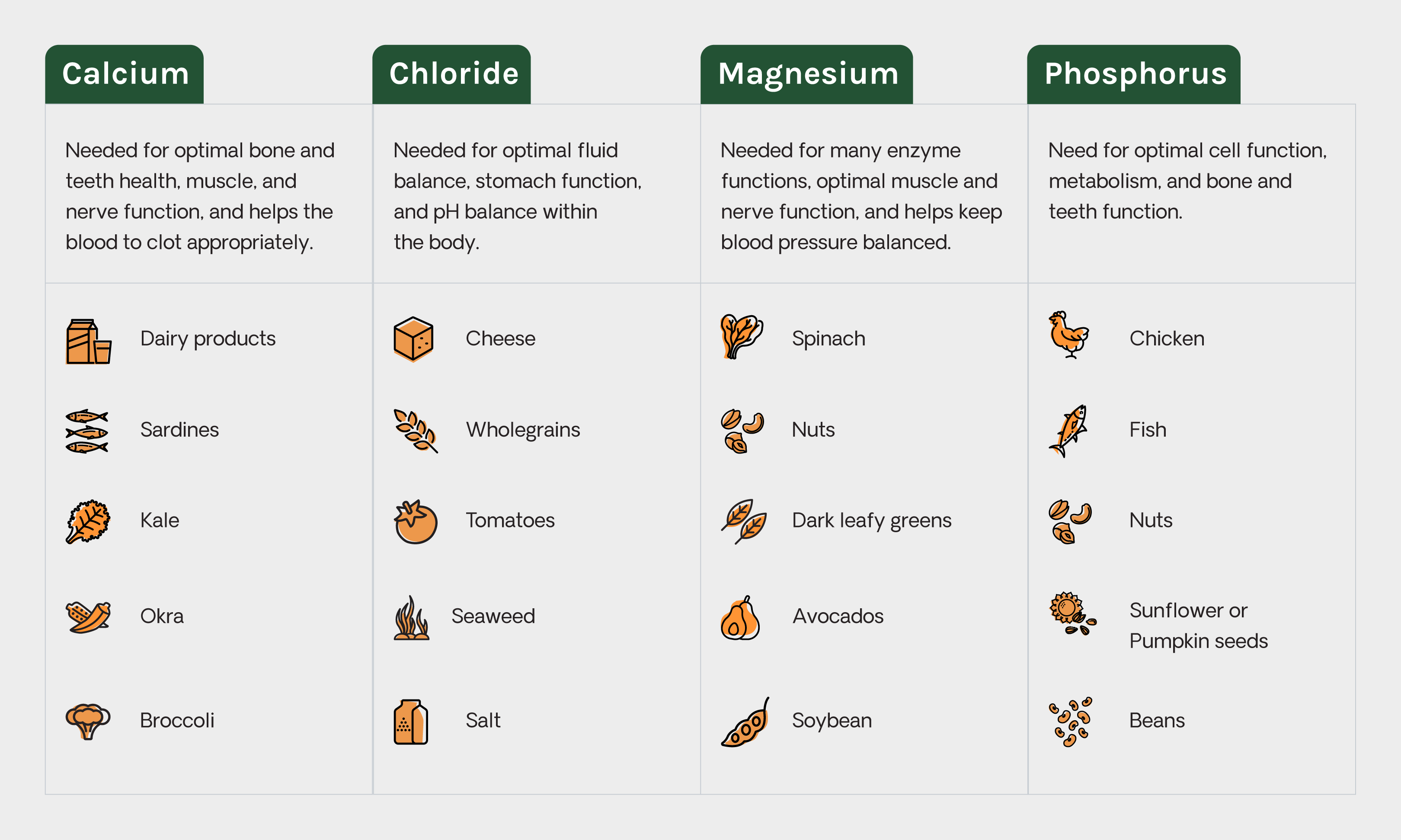
Both electrolytes are within the macro-mineral category. Below you can find the other macro-minerals, their function, and their sources.
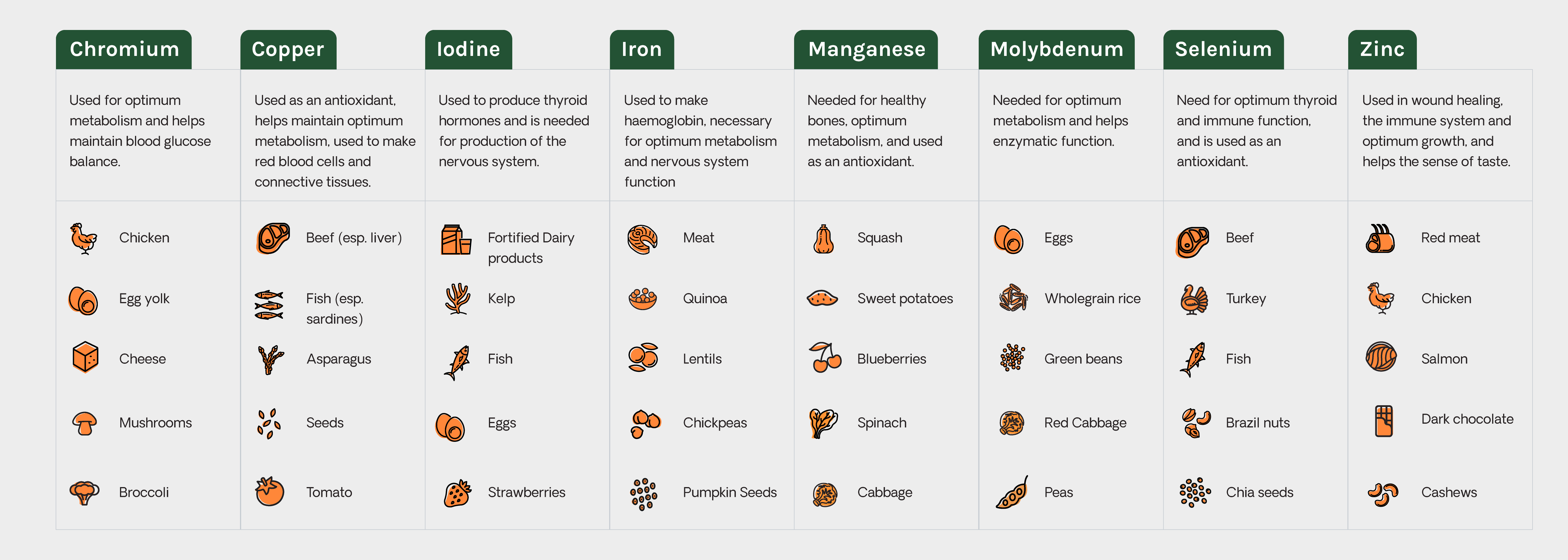
Micro-Minerals
Now onto the micro-minerals. Remember: they are just as essential, but your body needs a smaller amount of them!
Dietitian’s Tip:
Remember, the best way to get the most out of your vitamins and minerals is to mix between animal and plant sources. This way, your body gets everything it needs!
There you have it, both the macro- and micro-minerals of your diet. Don’t put too much pressure on yourself to reach all these every day. Look to getting your intake up throughout the week and the health benefits will surprise and amaze you!
Why not have a look at the kitchen to find the best way to prepare your food to get the most nutrition from them!
Or have a look at our cookbook to see if anything takes your fancy for trying in the week ahead!
Sources
- Government Dietary Recommendations
- Vitamins and Minerals for Energy, Fatigue and Cognition: A Narrative Review of the Biochemical and Clinical Evidence
- Vitamins and Minerals
Author
Clinically reviewed by Laura Perez