

If you’re trying to lose weight, meal planning is key. Whether you’re using weight loss injections or not, food plans help keep you on track and motivated.
But planning meals for your family can be challenging, because you’ve got picky eaters, different preferences, and dietary restrictions to consider.
To help you create meals that satisfy everyone at the table, we’ve put together a step-by-step guide to meal planning for the week. So everyone can enjoy nutritious meals.
Step 1: Discuss Preferences and Dietary Needs
Communication is key! Ask family members about their favourite meals, dietary preferences, and specific dietary restrictions or foods they don’t enjoy.
Develop a list of go-to family favourites that are easy to prepare and well-received by everyone.
Dealing With Picky Eaters
Catering for picky eaters requires a bit of creativity and flexibility. Here are some tips on how to get them to eat healthy, home cooked meals:
- Present meals in a deconstructed format, allowing picky eaters to assemble their plates according to their liking. This gives them a sense of control over their food.
- Sneak vegetables into familiar dishes by finely chopping or pureeing them. For example, add grated carrots to spaghetti sauce or blend spinach into a fruit smoothie.
- Include at least one or two familiar items in each meal to provide comfort for picky eaters. This could be a favourite side dish, type of bread, or a familiar protein source.
- Provide a variety of dips and sauces to accompany meals. Picky eaters may find certain foods more appealing when paired with a familiar or favourite sauce.
- Prepare meals with customizable components, such as a taco bar or pizza night, where each family member can choose their preferred toppings.
- Introduce new foods gradually and in small portions. Encourage picky eaters to take a small taste without pressuring them, allowing them to adjust at their own pace.
- Get picky eaters involved in the cooking process. When they have a hand in preparing the meal, they may be more willing to try the finished product.
Catering for Dietary Restrictions
How to Accommodate Vegetarians and Vegans:
- Include a variety of protein-rich plant-based options such as tofu, tempeh, legumes, beans, and lentils.
- Explore meat substitutes like veggie burgers or plant-based sausages for familiar flavours.
- Modify classic recipes to offer vegetarian versions, such as vegetable lasagna, meatless spaghetti, or chickpea curry.
- Experiment with creative plant-based alternatives to traditional meat ingredients.
- Roasted vegetables, quinoa salads, and stuffed peppers are versatile and satisfying options.
- Create wraps or rolls filled with grilled vegetables, hummus, and other plant-based proteins for a convenient and tasty option.
For Dietary Restrictions (e.g. Gluten-Free, Dairy-Free, Allergies):
- Incorporate gluten-free grains like rice, quinoa, or buckwheat as alternatives to traditional wheat-based grains.
- Use gluten-free flour or cornstarch as thickeners for sauces and gravies.
- Substitute dairy with plant-based alternatives such as almond milk, coconut milk, or oat milk.
- Explore dairy-free cheese and yoghurt options for those with lactose intolerance or dairy allergies.
Tip: make a list of the foods that everyone in your family enjoys eating and tape it inside the kitchen cabinet. Add a new recipe to the list every time you try one and everyone enjoys it.
Step 2: Check Your Fridge, Freezer and Cupboards
Before beginning, check the ingredients available in your cupboard, fridge, or freezer. This may spark inspiration for recipes.
Pick three ingredients from your pantry or freezer to include in your meal plan. For instance, if you have eggs, you could prepare an omelette. If you have vegetables, consider incorporating them into a stir-fry.
Step 3: Check the Calendar
It can be useful to regularly check if your family has lots of things going on during the week, such as sports club and events, get-togethers with friends and family, and maybe even a date night.
Any of these could indicate that you need to cook less or just for the kids, or need to rely on leftovers or a simple quick recipe.
Knowing these dates in advance will help you avoid overspending on food that will be wasted.
Step 4: Look for Inspiration
Choose a mix of recipes to keep meals interesting and well-balanced. To create nourishing and filling meals, include lean proteins, fruit and vegetables, whole grain carbohydrates, and healthy fats.
If you don’t know what to cook, we’ve got recipes for breakfast, lunch, and dinner on our blog.
On hectic days, quick recipes are essential. Here are some of our favourite 20-minute meals:
- Grilled fish with brown rice and vegetables (consider using frozen vegetables, which can be quickly cooked in the microwave and generate minimal waste).
- Stir-fry a mix of vegetables with rice or noodles and chicken.
- Prepare wholemeal pasta with olive oil, garlic, and chilli. Add some variety by adding grilled chicken or salmon.
- Speedy lentil curry with rice (using cooked tinned lentils can speed things along).
There are also some great recipe sites that focus on nutritious meals. Here are some of our favourites:
NHS Healthier Families Recipes
BBC Good Food Healthy Dinner Recipes
Step 5: Use a Weekly Meal Planner
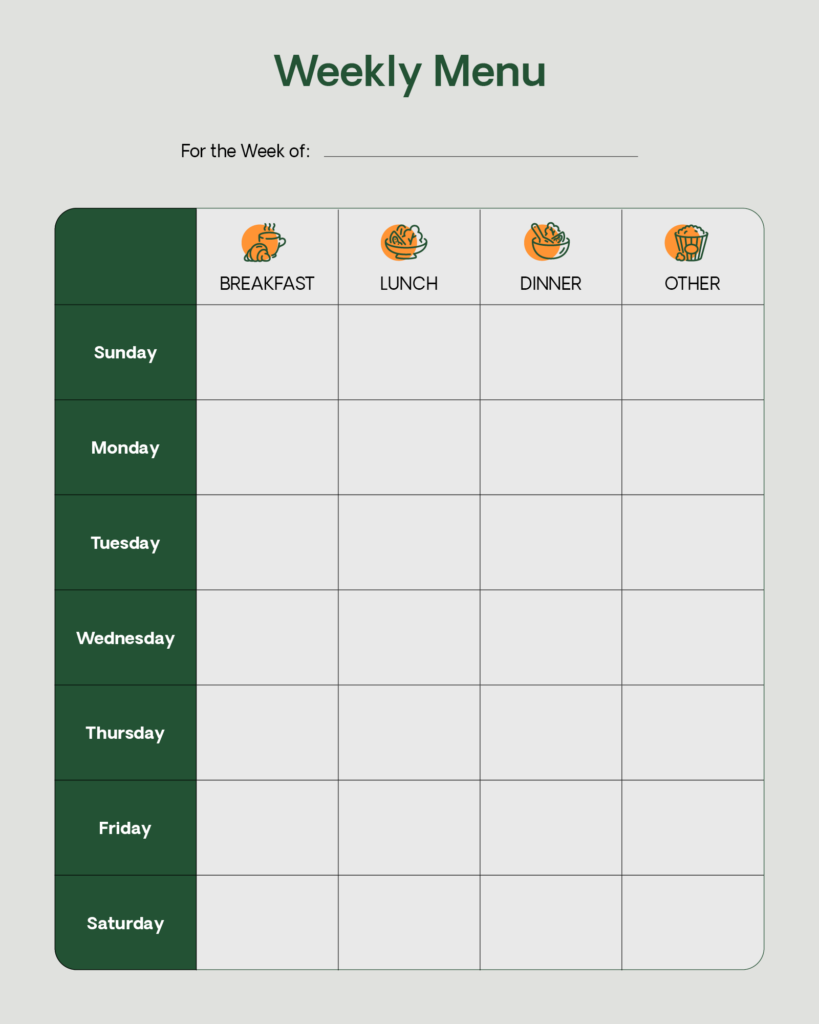
Use a calendar, a notepad or a meal-planning app to schedule your chosen recipes for each day.
A magnetic whiteboard can be helpful and invites children to participate in meal planning and serves as a fantastic calendar for family meal planning.
Step 6: Consider Batch Cooking and Freezing
Save time and effort by incorporating batch cooking into your meal planning routine. Prepare large quantities of staple ingredients such as grains, proteins, and sauces that can be used in multiple meals throughout the week.
Freeze individual portions for convenient access to pre-cooked components when time is tight.
Step 7: Introduce Theme Nights and Get Family Involved
Spice up your meal plan with theme nights to make family dinners more exciting. Consider themes like Mexican cuisine, comfort food classics, or DIY pizza nights.
Theme nights not only add an element of fun but also allow everyone to contribute ideas, making meal planning a collaborative family activity.
You can also involve family members in meal preparation and cleanup to share the workload – More hands make less work.
Step 8: Make a Grocery List
Create a detailed grocery list based on the ingredients needed for each recipe. Organise it by sections like whole grain carbohydrates, fruit and vegetables, dairy, lean proteins, etc. Don’t forget to also include foods you enjoy.
Tip: Keep a grocery list visible in the kitchen. Add staple foods to the list as you run out of them throughout the week.
Step 9: Meal Prep
Focus on prepping ingredients and meals for the first few days to make sure they stay fresh. As the week progresses, you can do more prep as needed.
Prep common ingredients in batches, like chopping vegetables, cooking grains, or marinating proteins. Store them in containers for easy access during the week. Choose ingredients that can be used in multiple recipes to save time and reduce waste.
During your meal preparation day, prioritise cooking items that require the most time: proteins such as chicken and fish, whole grains like brown rice, quinoa, farro, dried beans and legumes, as well as roasted vegetables.
New to meal prepping? Get more tips in our beginner’s guide here [link].
Meal Prep Tips:
Cook in Batches
Prepare additional servings and store the surplus in the refrigerator or freezer. Pies, curries, stews, and casseroles are all suitable for freezing.
When using the oven, consider multitasking by cooking additional items simultaneously. For instance, if preparing a casserole, you could cook extra chicken breasts to use in sandwiches.
Be Adaptable
On the other hand, don’t stress if your meal plan deviates slightly from the original schedule. It’s okay to change your meal plan.
In families, there will often be last-minute changes of plans. In situations like this, I resort to one of my backup plans, which includes pesto pasta, quick egg noodles with frozen vegetables, or porridge with fruit or yoghurt.
Authorship

Authored by Laura Perez
Content Writer / Clinical Nutrition Lead
With expertise in obesity management, eating disorders, and clinical nutrition, Laura has been a member of Simple Online Pharmacy’s clinical team since 2022. She engages with patients navigating their journeys with obesity management medications and believes in wraparound care, making nutrition science simple and accessible.
Updated 25/06/2025