

Broad Health Improvements
92% of patients report improved overall health. Nearly eight in ten say their quality of life and confidence have improved. Many describe better mobility and increased energy.
62% report improvements in mental wellbeing.
Obesity, GLP-1 Treatment, and Public Perception in the UK
One of the largest studies of its kind, combining a nationally representative survey of 2,000 UK adults with insights from 3,086 GLP-1 patients.
Obesity is one of the UK's most pressing health challenges. It's a chronic, complex medical condition linked to heart disease, diabetes, joint problems and reduced life expectancy. Without effective support at scale, rising prevalence over the next decade will continue to affect quality of life and increase pressure on the NHS and wider economy.
At the same time, treatment has advanced significantly. GLP-1 treatments are transforming weight management and helping many people achieve outcomes that previously felt out of reach. But while clinical progress has accelerated, public understanding has not always kept pace.
To explore this disconnect, Simple Online Healthcare commissioned one of the largest studies of its kind in the UK. The research combines a nationally representative survey of 2,000 UK adults with insights from 3,086 patients currently or recently using GLP-1 medication. Together, the findings reveal a clear tension between medical reality and social perception.
Patients try an average of 4 weight loss methods before starting GLP-1 treatment
*such as Slimming World, Weight Watchers or similar
Younger generations are less likely to see obesity as purely lifestyle-driven
Of those who report a reduction in medication
use fewer painkillers
reduced or stopped blood pressure medication
need less Type 2 diabetes medication
require less asthma medication
Lowest rejection (40%) and highest consideration (57%)
Highest rejection (70%) and lowest consideration (26%)
For patients, the benefits extend far beyond appearance.
92% of patients report improved overall health. Nearly eight in ten say their quality of life and confidence have improved. Many describe better mobility and increased energy.
62% report improvements in mental wellbeing.
41% say pre-existing conditions have improved, with some reducing reliance on other medications.
These findings suggest that for many people, treatment is about restoring health, function and day-to-day confidence, not simply achieving a lower number on the scale.
A common public narrative suggests that medical treatment replaces personal effort. Patient experience tells a different story.
Before starting medication, patients had tried an average of four different weight loss methods. Many had experienced cycles of short-term progress followed by regain.
In contrast, 88% say treatment has helped them maintain healthier eating and physical activity habits.
Rather than functioning as a shortcut, medication appears to create the stability and appetite regulation needed to build sustainable routines.
For many, it is a foundation that supports long-term behavioural change.
While weight loss itself is often positively received, the method used to achieve it can attract scrutiny.
54% of patients say others' attitudes towards them improved after they lost weight, suggesting that visible results are socially rewarded.
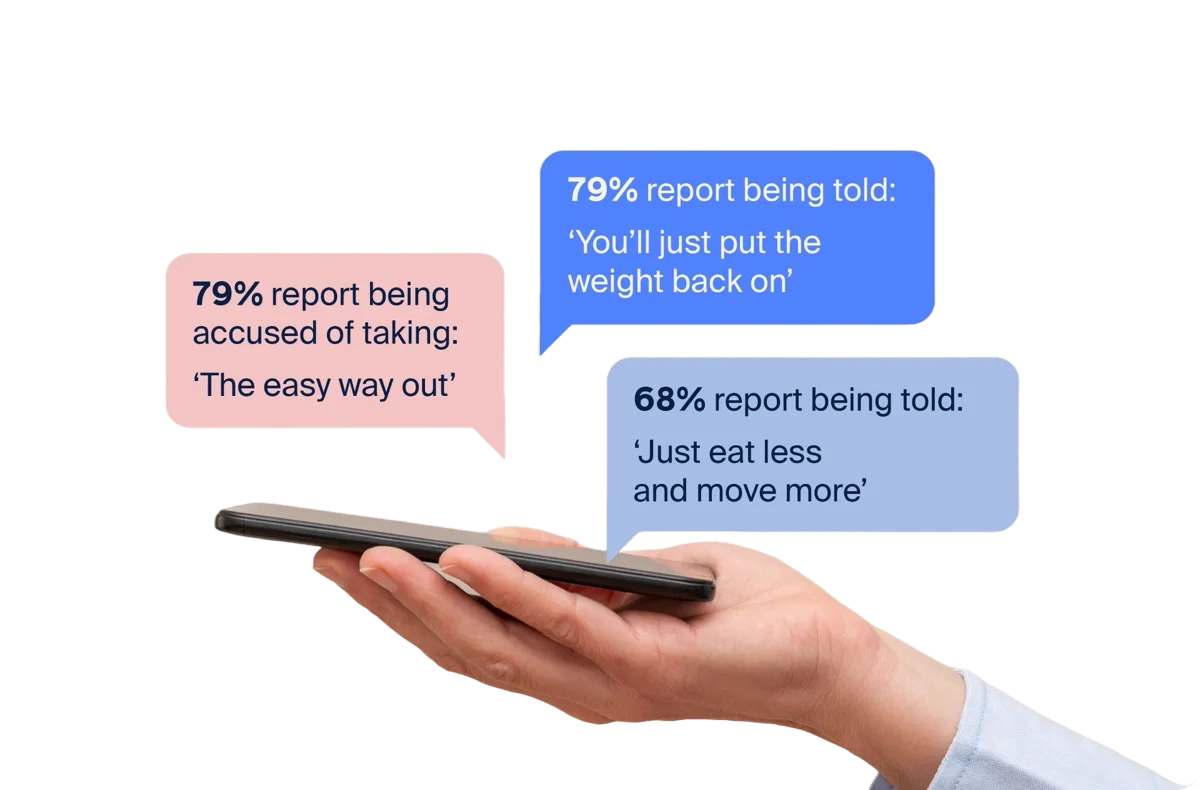
Yet 38% report being judged specifically for using GLP-1 treatment. Two thirds hide their treatment from some or all friends and family, and 21% say fear of stigma was a major factor in their decision to pursue it.
This creates a contradiction: outcomes are praised, but medically supported treatment is questioned.
Social stigma of this kind shapes healthcare decisions and influences how openly people discuss their care.
Public familiarity with GLP-1 treatments has increased rapidly, driven in part by media coverage and social media conversation. However, understanding has not kept pace with awareness.
Nearly half of UK adults do not recognise obesity as a medical condition. Only 26% say they feel comfortable discussing GLP-1 treatment.
One in five believe weight should be managed through lifestyle changes alone.
Much of the public narrative continues to frame obesity in terms of willpower and personal responsibility, or to characterise medication as a shortcut.
This overlooks the clinical evidence and the reality reported by patients. Awareness without accurate understanding risks deepening the stigma that already shapes treatment decisions.
report improved overall health
report improved mobility and physical comfort
report improvements in pre-existing medical conditions
When effective therapies are misunderstood or stigmatised, people may delay seeking help, feel uncomfortable discussing options with clinicians, or discontinue treatment prematurely. Some may seek support outside regulated pathways, increasing potential risk.
The findings suggest that perception, not efficacy, may now be one of the most significant barriers to maximising effective obesity care in the UK.
Clinically proven treatments are available and delivering measurable improvements in physical, mental and functional health. The remaining challenge is alignment.
Ensuring that public understanding reflects medical reality will support informed decision-making, reduce social stigma and secrecy, and help more people access and sustain the care they need.